
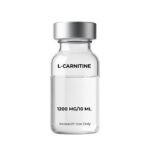

LC1200 L-Carnitine 1200mg/mL | 10-Vial Kit | Fatty Acid Oxidation Research
0-Region Domestic Shipping
LC1200 L-Carnitine 1200mg/mL — concentrated aqueous L-Carnitine for mitochondrial β-oxidation, fatty acid metabolism & CPT-I/II research. 10-vial kit. ≥99% HPLC purity, Janoshik COA. Research use only.


* The information on this page is a summary and is not intended to cover all available information about this medication. It does not cover all possible uses, directions, precautions, drug interactions or adverse effects and is not a substitute for the expertise and judgement of your healthcare professional.
{“@context”: “https://schema.org”, “@type”: “FAQPage”, “mainEntity”: [{“@type”: “Question”, “name”: “How do I reconstitute this peptide?”, “acceptedAnswer”: {“@type”: “Answer”, “text”: “Add 1–2mL bacteriostatic water to the lyophilized vial by directing water down the inner wall of the vial. Swirl gently until the powder fully dissolves — do not shake or vortex. The solution should be clear and colourless. Use immediately or refrigerate at 2–8°C.”}}, {“@type”: “Question”, “name”: “How should this peptide be stored?”, “acceptedAnswer”: {“@type”: “Answer”, “text”: “Store lyophilized peptide vials at −20°C for long-term storage. Once reconstituted, store at 2–8°C (refrigerator) and use within 21–28 days. Avoid repeated freeze-thaw cycles, direct light, and heat exposure.”}}, {“@type”: “Question”, “name”: “What purity is this QSC compound and how is it verified?”, “acceptedAnswer”: {“@type”: “Answer”, “text”: “All QSC compounds are tested to ≥99% purity by HPLC peak area analysis on every production batch. Molecular identity is confirmed by mass spectrometry. A Certificate of Analysis (COA) is published on the product page and independently verifiable at verify.janoshik.com using the batch reference number.”}}]}
What is L-Carnitine LC1200?
L-Carnitine (CAS 541-15-1, β-hydroxy-γ-trimethylaminobutyric acid) is a naturally occurring quaternary ammonium compound synthesised from lysine and methionine. Molecular formula C₇H₁₅NO₃, MW 161.20 g/mol. L-Carnitine is the obligate carrier for long-chain fatty acids across the inner mitochondrial membrane via the carnitine/acylcarnitine translocase system — enabling mitochondrial β-oxidation. At research concentrations, it modulates acetyl-CoA/CoA ratios, influences glucose oxidation, and participates in peroxisomal fatty acid oxidation. QSC LC1200 provides 1200mg/mL — a concentrated format for cell culture, in vitro lipid metabolism, and mitochondrial function assays.
Research Applications
Mitochondrial β-Oxidation
Carnitine palmitoyltransferase I/II (CPT-I/II) activity, acylcarnitine shuttle, fatty acid flux
Energy Metabolism
Acetyl-CoA/CoA ratio modulation, glucose vs. lipid substrate switching, ketone body production
Cellular Lipid Profiling
Acylcarnitine species profiling by mass spectrometry, free carnitine pools
Mitochondrial Function
Membrane potential (ΔΨm) studies, respiratory chain coupling, oxygen consumption rates
Peroxisomal Oxidation
Very-long-chain fatty acid (VLCFA) processing, peroxisomal carnitine acetyltransferase research
Quick Specs
| Form | Aqueous solution, 1200mg/mL |
| Purity | ≥99% by HPLC — every batch |
| CAS Number | 541-15-1 |
| Molecular Formula | C₇H₁₅NO₃ |
| Molecular Weight | 161.20 g/mol |
| Compound Type | Endogenous quaternary ammonium / mitochondrial fatty acid transporter |
| COA | Janoshik-independent, publicly verifiable |
| Manufacture | In-house synthesis — Qingdao, China |
| Storage | 2–8°C | protect from light |
| Shelf Life | 24 months unopened |
Certificate of Analysis (COA)
Frequently Asked Questions
Frequently asked questions
A seemingly elegant design can quickly begin to bloat with unexpected content or break under the weight of actual activity. Fake data can ensure a nice looking layout but it doesn’t reflect what a living, breathing application must endure. Real data does.
Websites in professional use templating systems. Commercial publishing platforms and content management systems ensure that you can show different text, different data using the same template. When it’s about controlling hundreds of articles, product pages for web shops.
A seemingly elegant design can quickly begin to bloat with unexpected content or break under the weight of actual activity. Fake data can ensure a nice looking layout but it doesn’t reflect what a living, breathing application must endure. Real data does.
Websites in professional use templating systems. Commercial publishing platforms and content management systems ensure that you can show different text, different data using the same template. When it’s about controlling hundreds of articles, product pages for web shops.



Reviews
Clear filtersThere are no reviews yet.